
Overview
Directions
- Head for Withernsea town centre and the promenade. The council lists free town parking; use designated spaces and follow current local restrictions.
- At Pier Towers, use the public beach ramp on the north side. The southern slipway is used by commercial fishermen and is not the advised public descent.
- Check the bottom of the ramp before descending: sand levels can leave a drop. Groynes also create drops and may block a safe return. Use another open public access or turn back rather than climb the defences.
- Ref: TA 33733 28755
Location photographs
Swipe to browse · Select a photograph to enlarge


Fossil Hunting
Look through loose shingle and isolated stones on the beach rather than digging into the cliffs. The sandier town frontage may offer fewer visible stones than uncovered gravel patches, but conditions change and finds are never guaranteed. Stay on open beach and do not climb around groynes or rock armour.
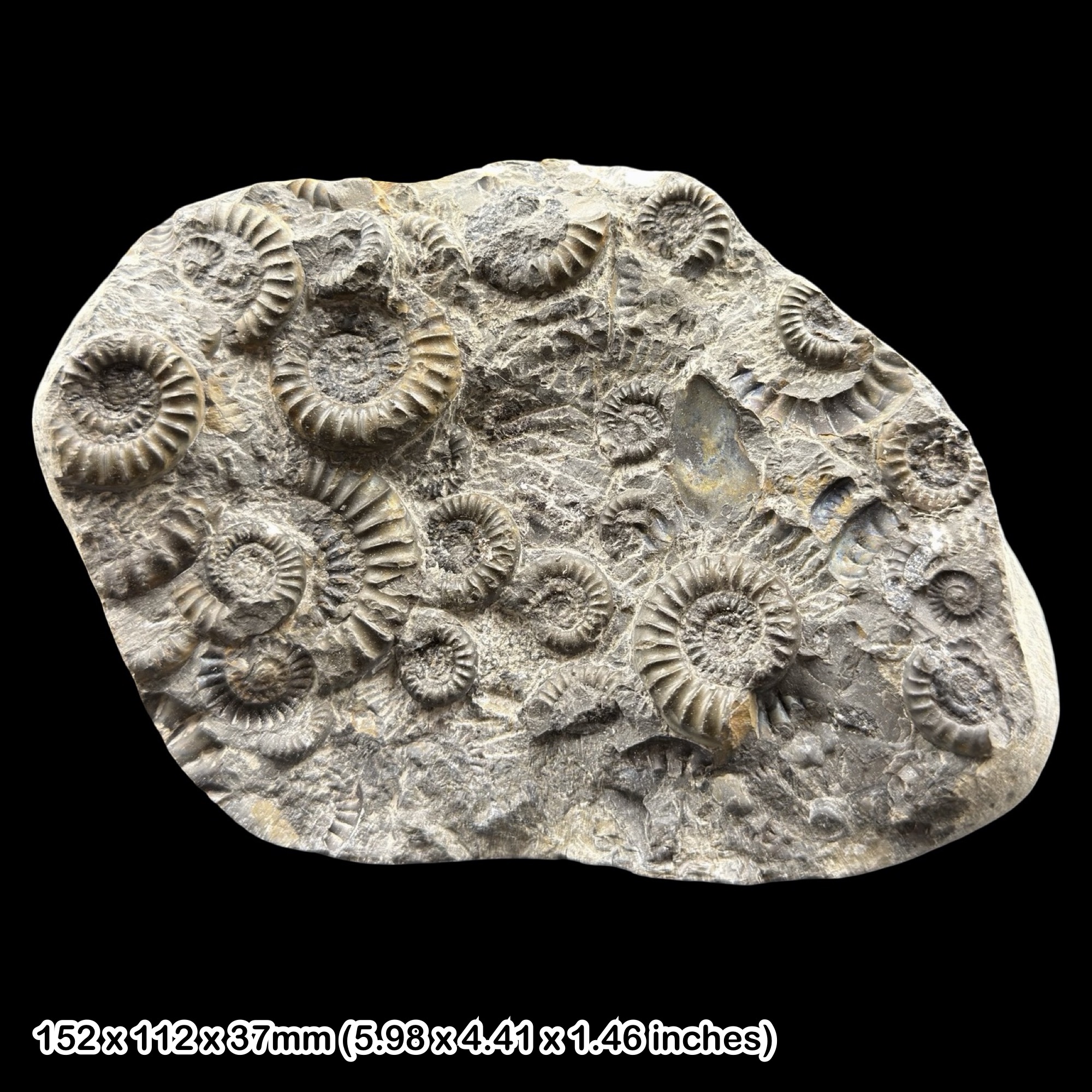
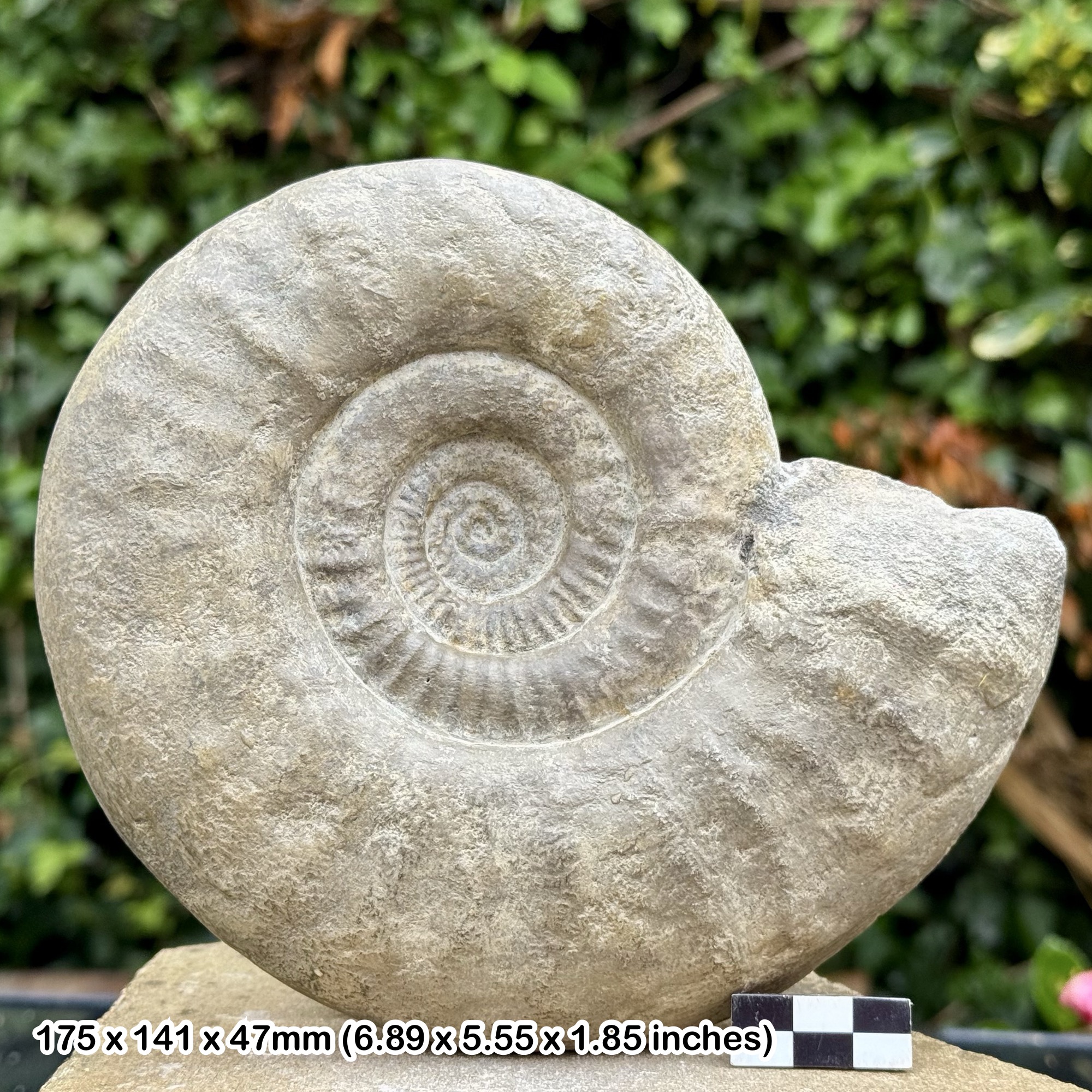
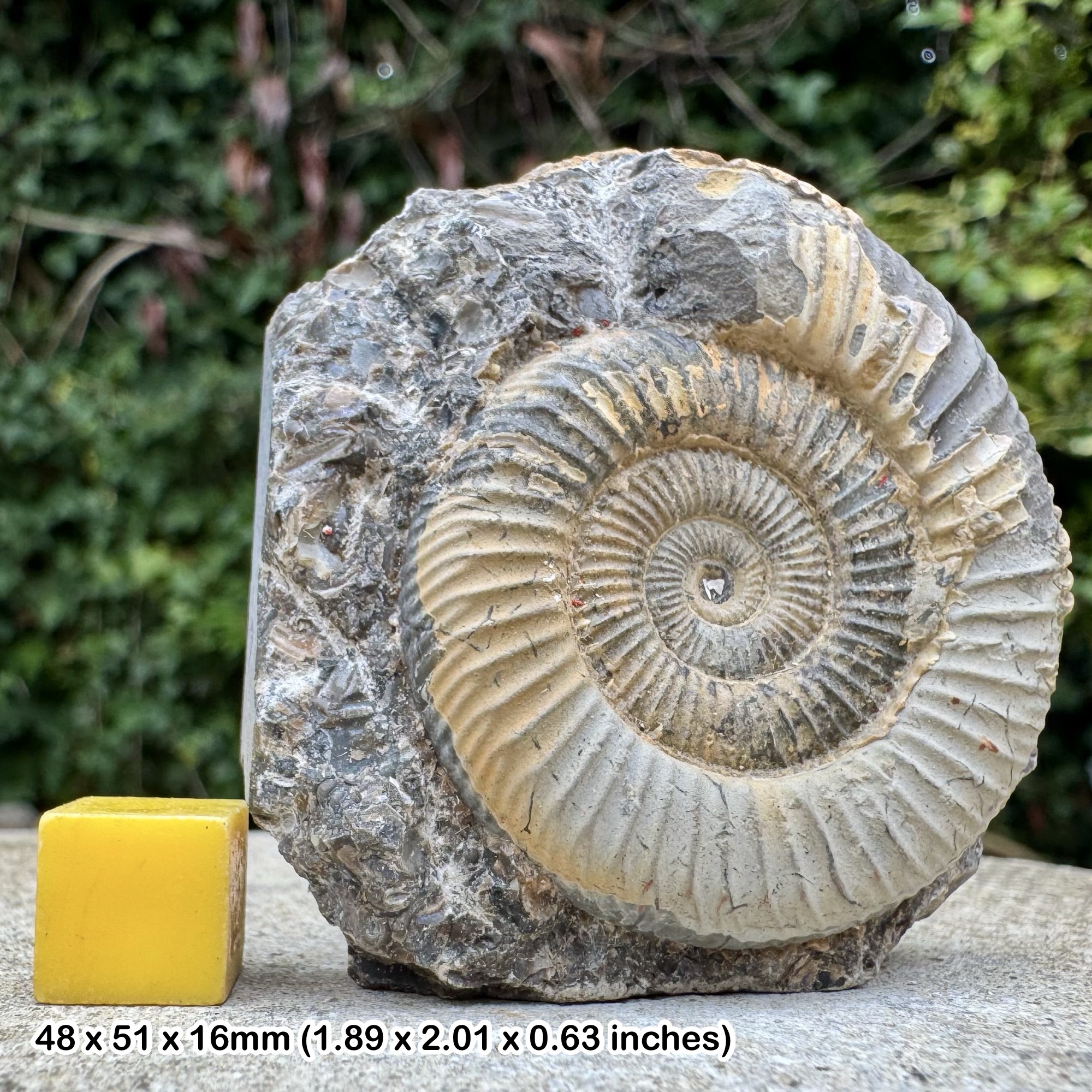
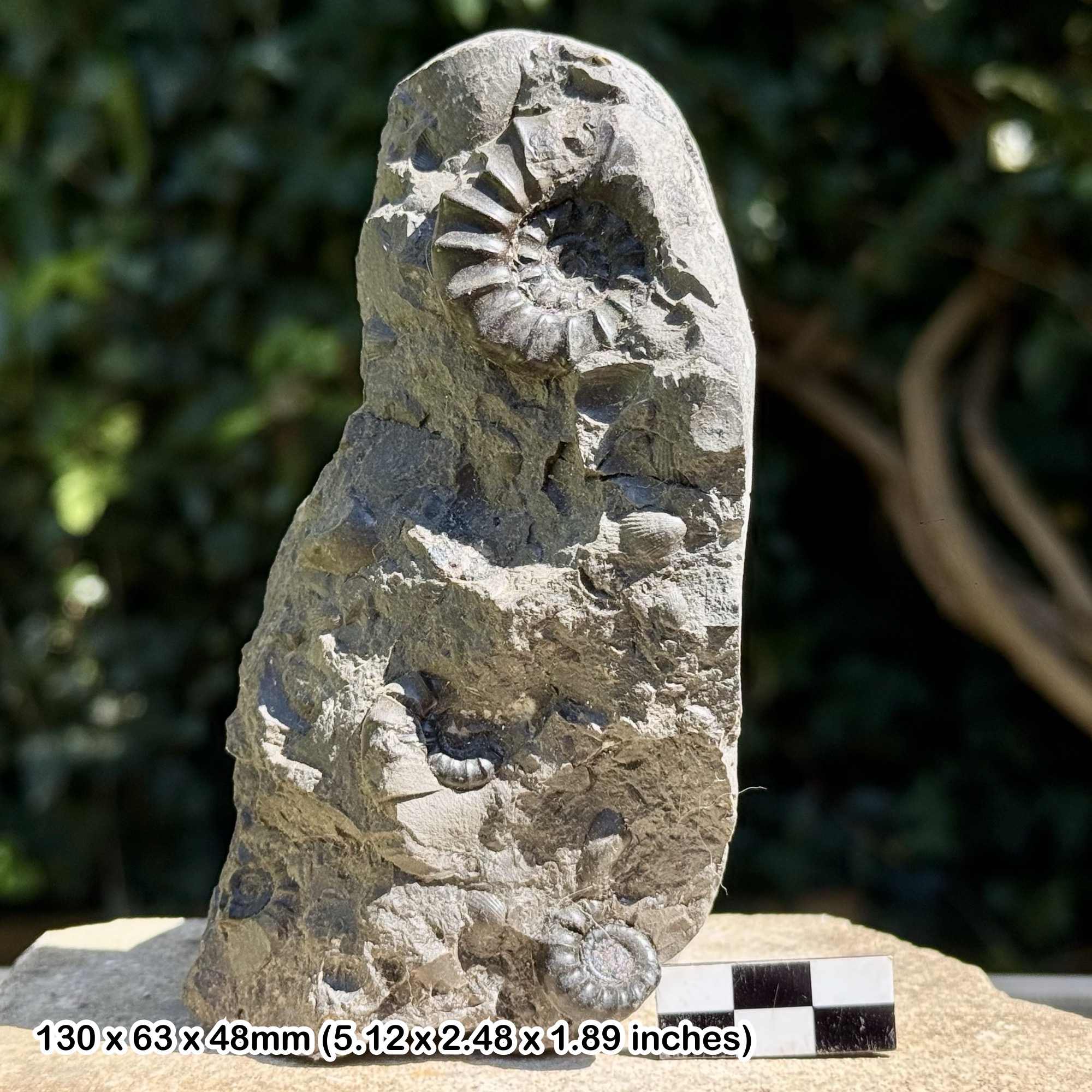
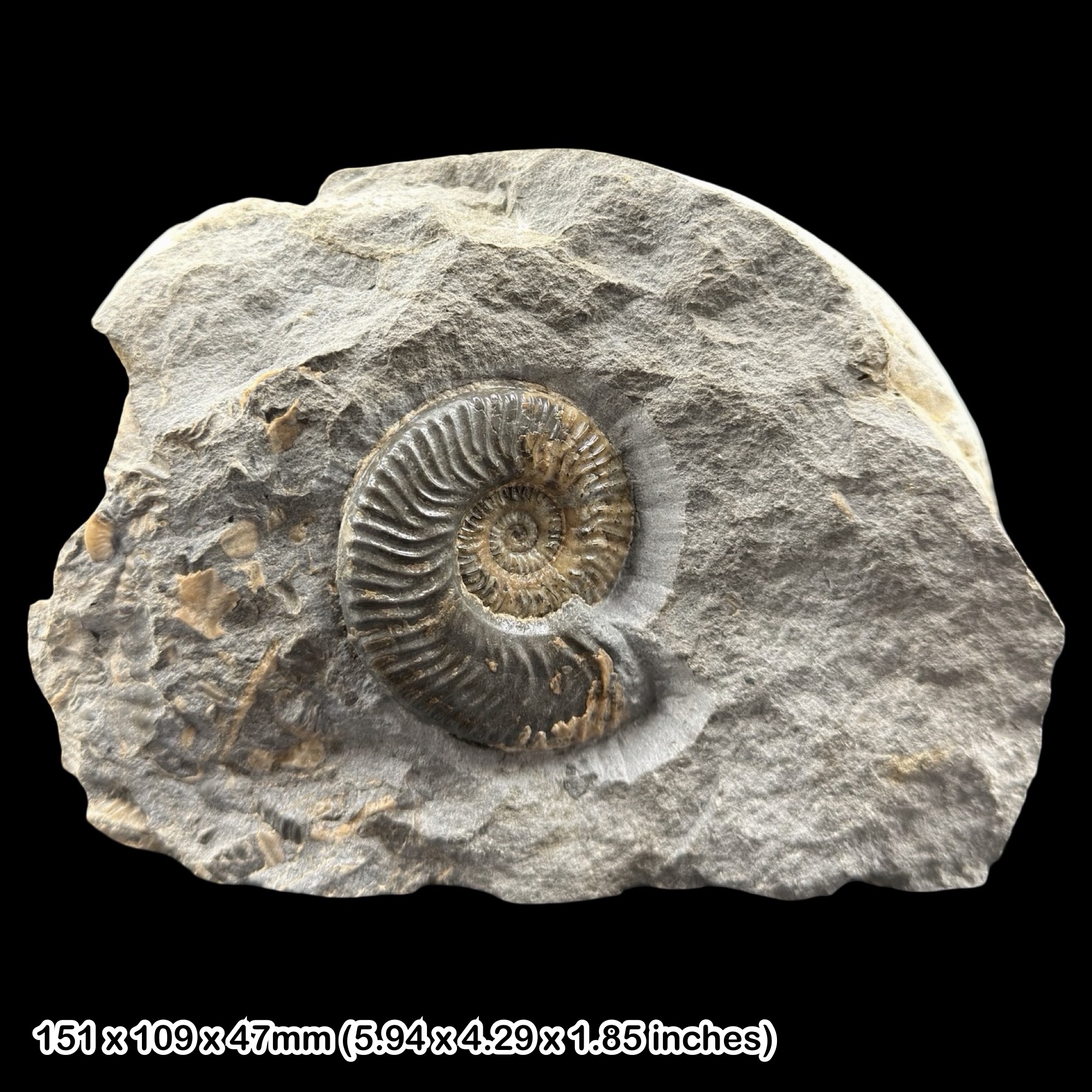
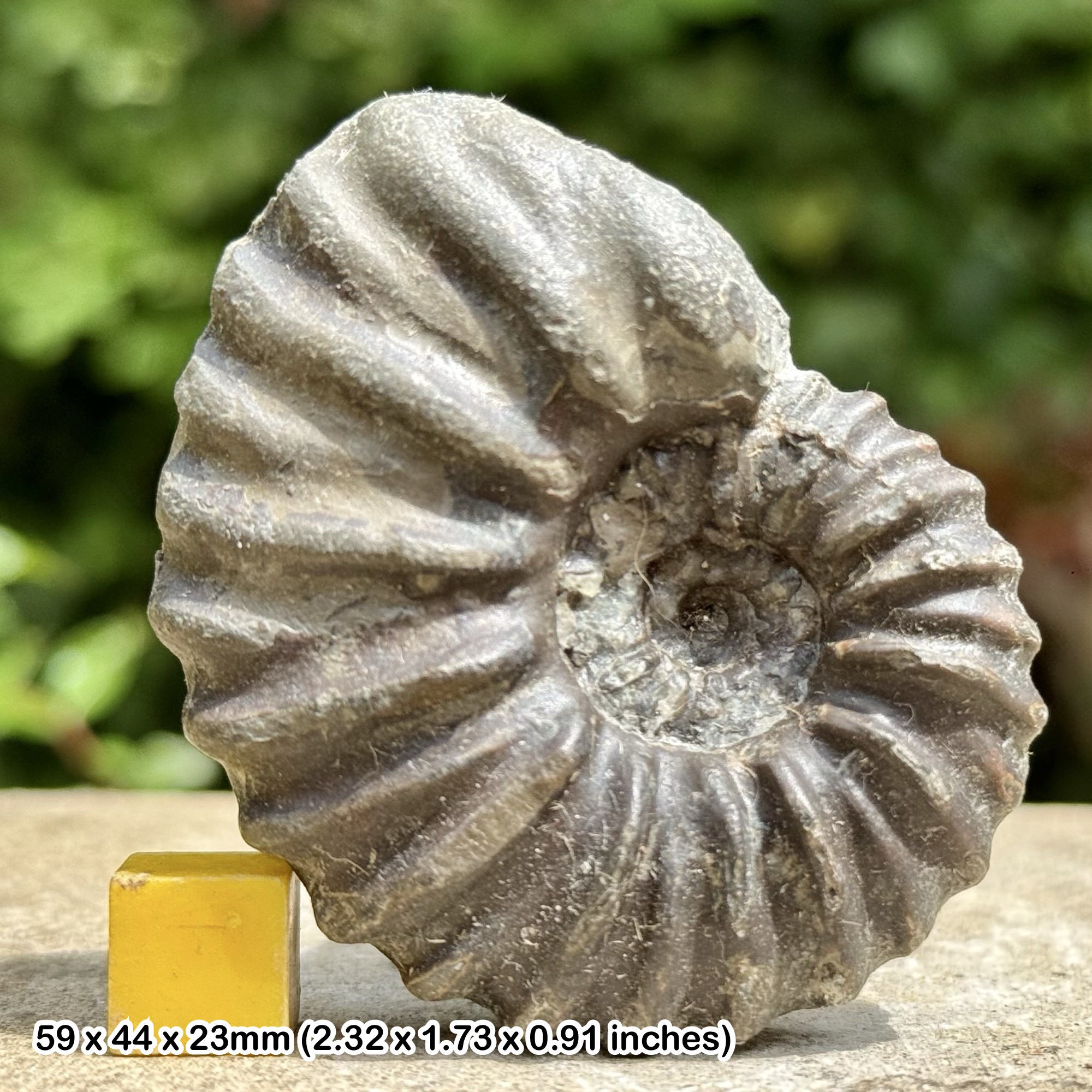
Recorded local erratics include Gryphaea, Arnioceras, Dactylioceras, Carboniferous corals and crinoidal limestone. These records cover beaches north and south of the promenade, rather than proving that every fossil occurs at the central access. Chalk and flint also occur, sometimes containing fossils.
A fossil’s age and the age of the till are different questions. Record whether a specimen was loose, in a detached block or observed within till, but do not excavate a standing section. An unusual bone, tooth or tusk should be photographed and reported for specialist identification before preparation.
Fossil photographs
Swipe to browse · Select a photograph to enlarge

Discoveries and milestones
Significant discoveries and geological milestones at Withernsea.
1900 – Coastal boulders compared
John Walker Stather included Withernsea in his study of erratic distribution along Holderness, helping document the transported character of the beach stones.
1906 – Red deer antler recorded
J. Wilkinson reported a well-preserved red deer antler recovered in a crab net from the peat bed on Withernsea beach. This is a historical record of younger organic deposits, not evidence for a Jurassic bone bed.
1985 – Town map area resurveyed
N. G. Berridge mapped the Withernsea area as part of the geological resurvey of southern Holderness.
2021 – Southern exposures covered by defences
New coastal defences covered previously accessible till sections south of the promenade. Earlier records remain valuable, but their cliff exposures cannot be assumed to be visible today.
Geology
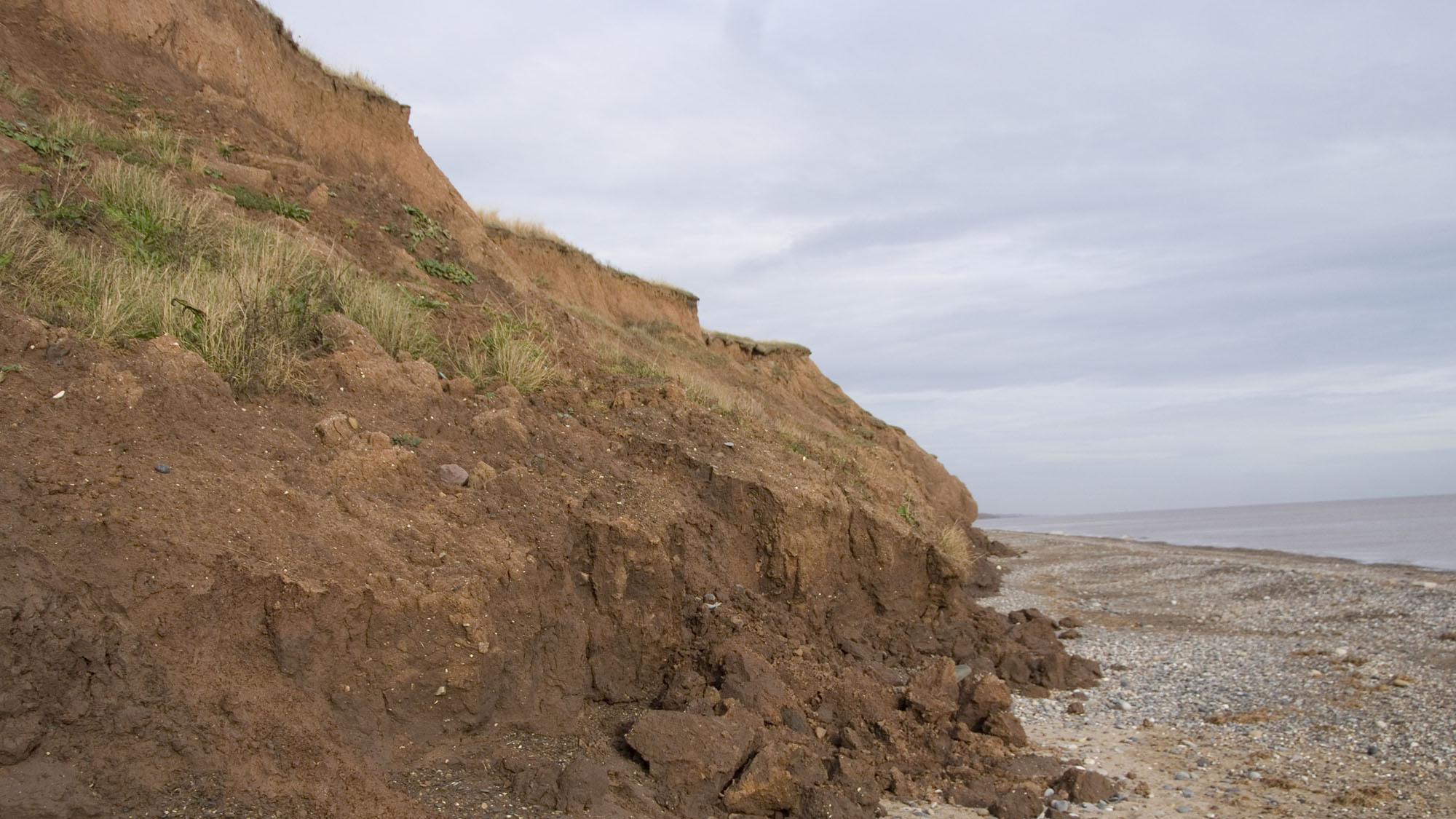
The coastal deposits belong to the glacial landscape of Holderness. The regional succession includes Skipsea Till and the overlying Withernsea Till, now commonly discussed as members of the Holderness Formation. Their enclosed stones were eroded from older rocks during transport and deposition.
The town frontage is defended, and construction in 2021 concealed some previously studied southern cliff exposures. Beach finds therefore cannot be used to reconstruct a simple continuous log beside the promenade. Historical peat and vertebrate records also belong to a different part of the Quaternary story from the transported Jurassic and Carboniferous material.
Detailed geology and bed-by-bed succession
Detailed geology and stratigraphy of Withernsea.
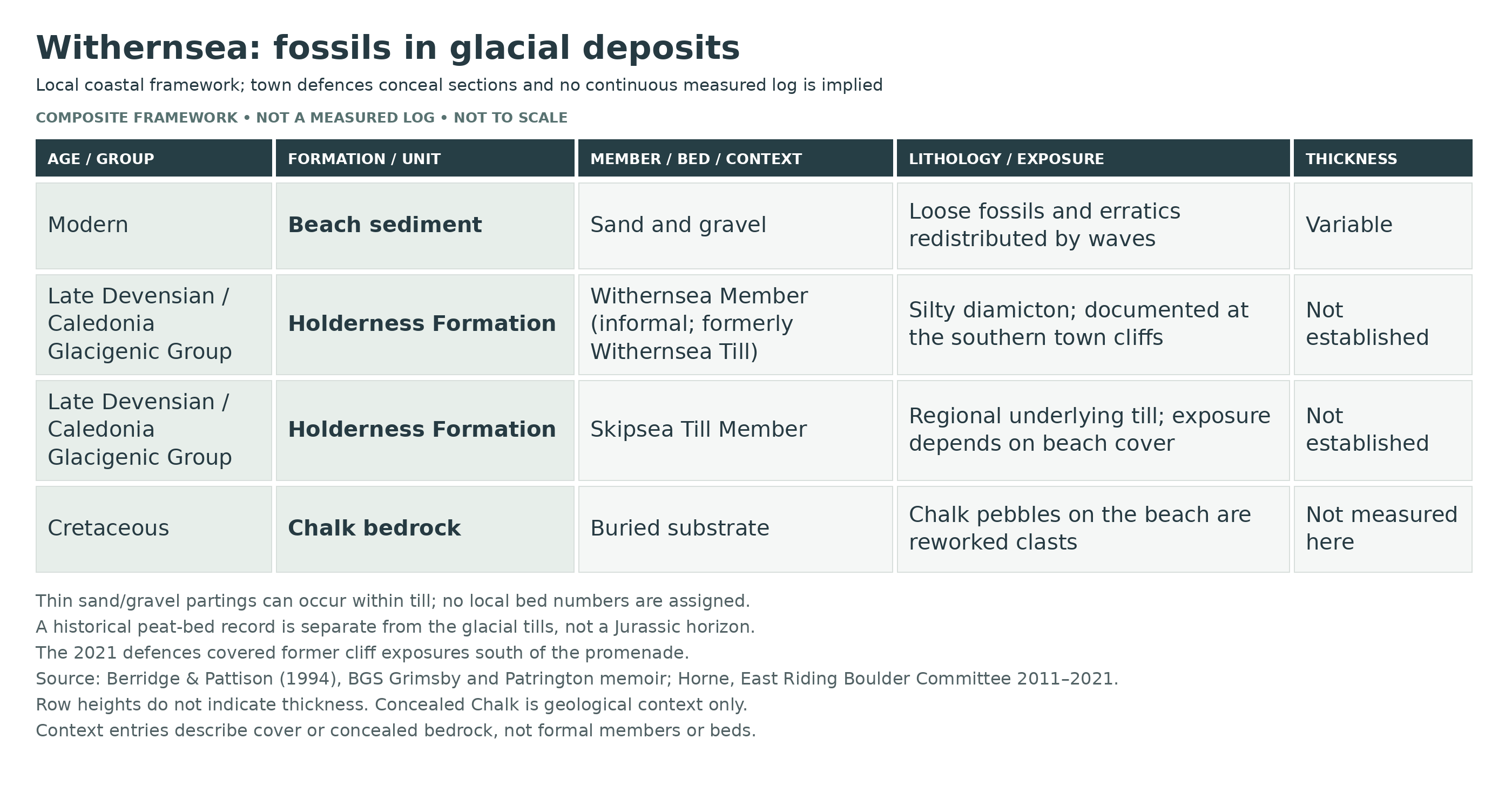
The framework below distinguishes the glacial deposits from younger surface material and older fossils carried within them. Exposure varies as beach sediment and landslips move.
CALEDONIA GLACIGENIC GROUP
NORTH SEA COAST GLACIGENIC SUBGROUP
Holderness Formation
These are the regional formal units for the Late Devensian glacial succession. Historical till names and local research subdivisions are explained below; a colour change alone does not prove a separate ice advance.
Skipsea Till Member
The regional lower till is the former Drab Till. It provides the underlying framework but is not claimed to form a continuously visible collecting bed along the defended promenade.
Withernsea Member — informal member name
This is the former Purple Till or Withernsea Till. Local erratic collections explicitly record material from the southern Withernsea cliffs in this till. It contains mixed stones within a predominantly fine-grained matrix.
Sand and gravel partings
Waterlaid seams and lenses occur in the southern Holderness tills. These variable seams are not correlated here with a numbered bed sequence or with the measured Dimlington succession. Their local thickness and continuity vary.
Till lithology and weathering
Skipsea Till is comparatively variable and stony, with chalk fragments in a sandy to silty clay matrix. Withernsea Till is generally less stony and more silty; it weathers to reddish brown. Thin sand and gravel partings interrupt the clay. These contrasts are regional guides, not infallible tests for identifying every exposure.
Weathered upper till
The old Hessle Till designation was applied to weathered upper portions of the glacial deposits. It is not treated here as an additional ice-age layer.
Historical peat exposure
The early twentieth-century record of deer remains from a beach peat bed is kept separate from the glacial till hierarchy. Its modern extent, thickness and present visibility are not established, so it is not shown as a continuous layer.
Modern beach and buried Chalk
Waves redistribute sand, gravel and fossils along the shore. Chalk pebbles are reworked material and must not be confused with an exposed Chalk bedrock section. Sea defences obscure parts of the former cliff line.
References
Berridge and Pattison (1994), Grimsby and Patrington memoir
Yorkshire Type Erratics collection
East Riding Boulder Committee 2011–2021
BGS superficial-deposit framework, RR/10/03
Safety
Check the tide and sea conditions before setting out, and keep enough time and open beach for your return. Water can reach the cliff foot and cut off a route even when a distant tide prediction appears favourable. Never attempt to escape by climbing the clay cliffs.
Stay well clear of cliff faces, overhangs and the edge above. Rain-soaked till can slide without warning; fresh falls and soft mud are not safe collecting platforms. Wear grippy footwear, supervise children closely and turn back if the route is narrowing. For a coastal emergency call 999 and ask for the Coastguard.
Equipment
Take sturdy grippy footwear, tide information, a charged phone, a hand lens, a small soft brush, wrapping and rigid specimen boxes. Photograph each useful find and record the beach locality and date.
Loose surface finds are the priority. Do not dig into unstable till or disturb a standing section. If a permitted loose block genuinely needs splitting, use eye protection and keep other people clear; never strike sea defences, suspicious objects or a fossil-bearing surface blindly.
Cleaning And Treating
Begin with a soft brush and preserve the surrounding matrix. Robust limestone or flint specimens can be briefly rinsed in fresh water to remove salt and clay, but test a small area first and stop if the surface softens or flakes. Do not soak shale, pyrite, fragile shells or carbonised plant material.
Allow stable specimens to dry slowly at room temperature. Keep pyritic fossils dry and inspect them for cracking or powdery decay. Avoid acids, bleach and household varnish. If a fossil is crumbly, large or scientifically unusual, leave it unprepared and seek specialist conservation advice.
Identify Your Finds
Need help identifying a fossil? Share clear photos, where you found it and its size with the community.
Further Reading
Deposits Magazine: a fossil hunter’s guide to the Yorkshire coast (regional background)
BGS: geology of Grimsby and Patrington
Yorkshire Type Erratics collection
East Riding Boulder Committee records
Council: Withernsea beach and public ramp
Access Rights
Use public promenade access and follow local signs. Do not remove or hammer coastal armour, disturb cliff exposures or assume permission to cross private cliff-top land. Seasonal beach dog restrictions apply on the signed central stretch; check the current council map if bringing a dog.
It is important to follow our ‘Code of Conduct’ when collecting fossils or visiting any site. Please also read our ‘Terms and Conditions’.
Links
♦ Fossil Discussions
♦ Fossil Articles
♦ Buy Fossils, Tools and Equipment
♦ Buy Crystals, Meteorites, and Artefacts
♦ Join Fossil Hunts
♦ UK Fossils Network


